Agriculture Secretary Vilsack Celebrates USDA's 150th Year of Service
WASHINGTON, May 15, 2012 - Agriculture Secretary Tom Vilsack today marked the 150th anniversary of the U.S. Department of Agriculture and highlighted the positive impact that USDA has on the life of Americans each day.
"For 150 years, USDA has supported our nation's economic prosperity and touched the lives of generations of Americans," said Vilsack. "I'm proud of the USDA employees who carry out President Lincoln's legacy throughout the country and around the world, making USDA a truly 'Every Day, Every Way' department. Whether improving domestic and international access to food, promoting nutrition and safety of our food supply, conserving our natural resources, advancing agricultural exports, or developing the rural economy, USDA helps Americans to lead better lives." Read the entire press release here.
For more information on the 150th anniversary celebration, please visit www.usda.gov/usda150. Additional information on USDA's work to strengthen the American economy can be found at www.usda.gov/results.
A Drop of Knowledge (formerly the eBulletin ) is one of RCAP’s main communications resources. It is an electronic newsletter delivered via email that provides tools focusing on issues facing water and wastewater systems and small, rural communities.
The newsletter's name reflects its purpose, to provide:
- useful, practical information – knowledge that you can put into action in your water or wastewater system or community
- a small amount of new knowledge – just enough to make a difference without requiring you to embark on large improvements that may be overwhelming
Click here to view all issues and subscribe!
New RCAP Publication Now Available
Protecting Water Quality by Optimizing the Operations and Maintenance of Distribution Systems is now available. This publication provides background information on how to maintain water quality in drinking water distribution systems and treated-water storage facilities by concentrating on common problems and challenges and identifying potential improvements and solutions. The primary audience is operators of water distribution systems at utilities that serve up to 3,300 people, but operators of larger systems and other stakeholders may also find it valuable. Focuses on regulatory requirements and best practices of the drinking water community. Is intended to serve as a resource for an individual operator’s study or as a reference text in a classroom or training setting. Click here to download a PDF copy of the guide from our Guides and Publications page, or contact a MAP Technical Assistance Provider in your state to request a printed copy.
MAP's Spring e-SOURCE Newsletter
.jpg)
MAP's Spring 2012 issue of the e-SOURCE newsletter has been sent out. If you haven't received yours, click here to preview. There's a subscription link at the bottom if you'd like to add your e-mail address to our mailing list for future issues.
USDA Announces Assistance to Rural Communities and Residents Affected by Recent Tornadoes
WASHINGTON, March 14, 2012 Agriculture Secretary Tom Vilsack today announced comprehensive outreach efforts are underway to assess damage and assist rural Midwest and Southern communities in the wake of recent deadly storms.
"These storms struck the very heart of rural America, " said Vilsack. "USDA regional and local staff members are on the front lines, have worked each day since the storms hit, and for many it's personal: they live and work alongside the victims. I've directed our expertise and resources to be put to the fullest possible use." Click here to read the News Release in its entirety.
RCAP Publication for Board Members is Now Available

The Big Guide for Small Systems: A Resource for Board Members is now available. This publication is intended for both new and experienced members of the board of directors of a drinking water or wastewater utility or members of the highest governing board of a system. For new board members, it is an ideal orientation to all of the aspects of your new role. For those with some experience, it can serve as a useful reference guide for your continuing role. Used on a group basis with whole boards, it can help set some standards in your work together, enabling everybody to get on the same page and moving in the same direction.
Regardless of your experience level, as a board member, you have chosen to be responsible for and have been elected to maintain and improve your community's health by protecting its water. It's a big job, and understanding and using this guide can be helpful in performing your duties. Click here to download a PDF copy of the guide from our Guides and Publications page, or contact a MAP Technical Assistance Provider in your state to request a printed copy.
New tool provides access to
water-pollution data

EPA announced the release of a new tool that provides the public with important information about pollutants that are released into local waterways. The discharge monitoring report pollutant loading tool brings together millions of records and allows for easy searching and mapping of water pollution by local area, watershed, company, industry sector and pollutant. The public can use this new tool to protect their health and the health of their communities.
Searches using the pollutant loading tool result in “top 10” lists to help users easily identify facilities and industries that are discharging the most pollution and impacted waterbodies. When discharges are above permitted levels, users can view the violations and link to details about enforcement actions that EPA and states have taken to address these violations.
Facilities releasing water pollution directly into our nation’s waterways, such as wastewater treatment plants or industrial manufacturers, must receive a permit to discharge under the Clean Water Act. Each permit sets specific limits for how much can be discharged. It also requires the permittee to frequently sample their wastewater discharges and report the data to their state or EPA permitting authority. (story reprinted from rcap.org website)
Go to the tool
Joint HAC and RCAP Publication Focuses on Housing and Water: The Critical Connection
Over the last 40 years, the Housing Assistance Council (HAC) and the Rural Community Assistance Partnership (RCAP) have worked individually and cooperatively to improve the living conditions of the lowest-income rural residents throughout America.
This joint issue of Rural Matters and Rural Voices provides examples of successful projects that have improved opportunities for affordable housing and water and waste services for low-income rural families and communities.
Recently MAP partnered with CRG and transferred their $200,000 Wells Fargo investment to CRG. That partnership yielded an additional $300,000, for a total of $500,000 being added to the CRG/RCAP Loan Fund. These loans are now available throughout the MAP nine-state region. "Keeping the Water Flowing in Rural America for 35 years" is an article within the publication that addresses how the CRG/RCAP loan fund is helping small communities meet critical capital needs and find new funding. To view the full issue, click on the image on the left.
How do we get clean, safe water?
Despite using and benefitting from drinking water and wastewater systems multiple times every day, most of us don't even think about or know how these systems work. It takes a lot, in terms of natural, human, financial and other resources, as well as physical, chemical and biological processes, to bring clean, safe drinking water to your home or to deal wtih the waste you produce from a toilet or washing machine. RCAP has created animated diagrams with short videos to explain some of what is required in treating water. The videos are meant to make non-operators more comfortable with the vocabulary and terms that a plant's operator uses and to help a utility's decision makers understand what is required to operate a dependable and sustainable water utility.
Surface Water Treatment Process

Liquid Assets: The Story of Our Water Infrastructure
Liquid Assets, a ninety-minute documentary, tells the story of essential infrastructure systems: water, wastewater, and stormwater. These systems — some in the ground for more than 100 years — provide a critical public health function and are essential for economic development and growth. Largely out of sight and out of mind, these aging systems have not been maintained, and some estimates suggest this is the single largest public works endeavor in our nation's history. For more information and broadcast schedule, click here.
Finding Solutions,
Revitalizing Rural Communities
To motorists speeding by on the interstate or state highway, small towns may look idyllic. Yet many communities and tribal nations face seemingly overwhelming challenges and few resources to overcome them. However, through individualized support from Midwest Assistance Program, Inc., they find the solutions that will help revitalize their communities.
Welcome to Midwest Assistance Program’s Web site. It’s been designed
to provide you with the information, programs, services and support you
need to find solutions to your community’s challenges.
Our mission
Midwest Assistance Program, Inc., is dedicated to helping rural communities and tribal nations improve their environment, quality of life and achieve self-sustainability.
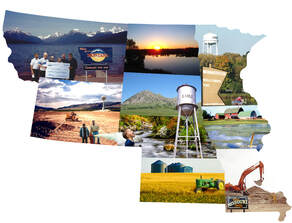
For resources and programs specific to your state, click on the map. For resources and programs specific to tribal nations, click here.