New tool provides access to
water-pollution data

EPA announced the release of a new tool that provides the public with important information about pollutants that are released into local waterways.  The discharge monitoring report pollutant loading tool brings together millions of records and allows for easy searching and mapping of water pollution by local area, watershed, company, industry sector and pollutant.  The public can use this new tool to protect their health and the health of their communities.

Searches using the pollutant loading tool result in “top 10” lists to help users easily identify facilities and industries that are discharging the most pollution and impacted waterbodies.  When discharges are above permitted levels, users can view the violations and link to details about enforcement actions that EPA and states have taken to address these violations.

Facilities releasing water pollution directly into our nation’s waterways, such as wastewater treatment plants or industrial manufacturers, must receive a permit to discharge under the Clean Water Act.  Each permit sets specific limits for how much can be discharged.  It also requires the permittee to frequently sample their wastewater discharges and report the data to their state or EPA permitting authority. (story reprinted from rcap.org website)

Go to the tool 


Joint HAC and RCAP Publication Focuses on Housing and Water: The Critical Connection

Over the last 40 years, the Housing Assistance Council (HAC) and the Rural Community Assistance Partnership (RCAP) have worked individually and cooperatively to improve the living conditions of the lowest-income rural residents throughout America.

This joint issue of Rural Matters and Rural Voices provides examples of successful projects that have improved opportunities for affordable housing and water and waste services for low-income rural families and communities.

Recently MAP partnered with CRG and transferred their $200,000 Wells Fargo investment to CRG. That partnership yielded an additional $300,000, for a total of $500,000 being added to the CRG/RCAP Loan Fund. These loans are now available throughout the MAP nine-state region. "Keeping the Water Flowing in Rural America for 35 years" is an article within the publication that addresses how the CRG/RCAP loan fund is helping small communities meet critical capital needs and find new funding. To view the full issue, click on the image on the left.


How do we get clean, safe water?

Despite using and benefitting from drinking water and wastewater systems multiple times every day, most of us don't even think about or know how these systems work. It takes a lot, in terms of natural, human, financial and other resources, as well as physical, chemical and biological processes, to bring clean, safe drinking water to your home or to deal wtih the waste you produce from a toilet or washing machine. RCAP has created animated diagrams with short videos to explain some of what is required in treating water. The videos are meant to make non-operators more comfortable with the vocabulary and terms that a plant's operator uses and to help a utility's decision makers understand what is required to operate a dependable and sustainable water utility.

Surface Water Treatment Process

Wastewater Treatment Cycle


Liquid Assets: The Story of Our Water Infrastructure

Liquid Assets, a ninety-minute documentary, tells the story of essential infrastructure systems: water, wastewater, and stormwater. These systems — some in the ground for more than 100 years — provide a critical public health function and are essential for economic development and growth. Largely out of sight and out of mind, these aging systems have not been maintained, and some estimates suggest this is the single largest public works endeavor in our nation's history. For more information and broadcast schedule, click here.


New RCAP Videos

RCAP has produced videos to accompany some of their newly-published guides. These short, informative videos provide a brief overview of what you'll find inside and how you can best utilize the information. Watch the videos below, then visit our Guides and Publications page to download your own PDF copy of the guides.

New guide on setting rates for small water utilities from RCAP on Vimeo.

New guide on the basics of financial management for small water utilities from RCAP on Vimeo.


(View More.......)


Finding Solutions,
Revitalizing Rural Communities

To motorists speeding by on the interstate or state highway, small towns may look idyllic. Yet many communities and tribal nations face seemingly overwhelming challenges and few resources to overcome them. However, through individualized support from Midwest Assistance Program, Inc., they find the solutions that will help revitalize their communities.

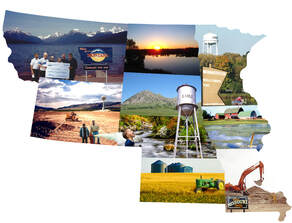
Welcome to Midwest Assistance Program’s Web site.  It’s been designed to provide you with the information, programs, services and support you need to find solutions to your community’s challenges.Regional map   Montana North Dakota Minnesota Wyoming Sout Dakota Nebraska Iowa Kansas Missouri

Our mission

Midwest Assistance Program, Inc., is dedicated to helping rural communities and tribal nations improve their environment, quality of life and achieve self-sustainability.

For resources and programs specific to your state, click on the map. For resources and programs specific to tribal nations, click here.